
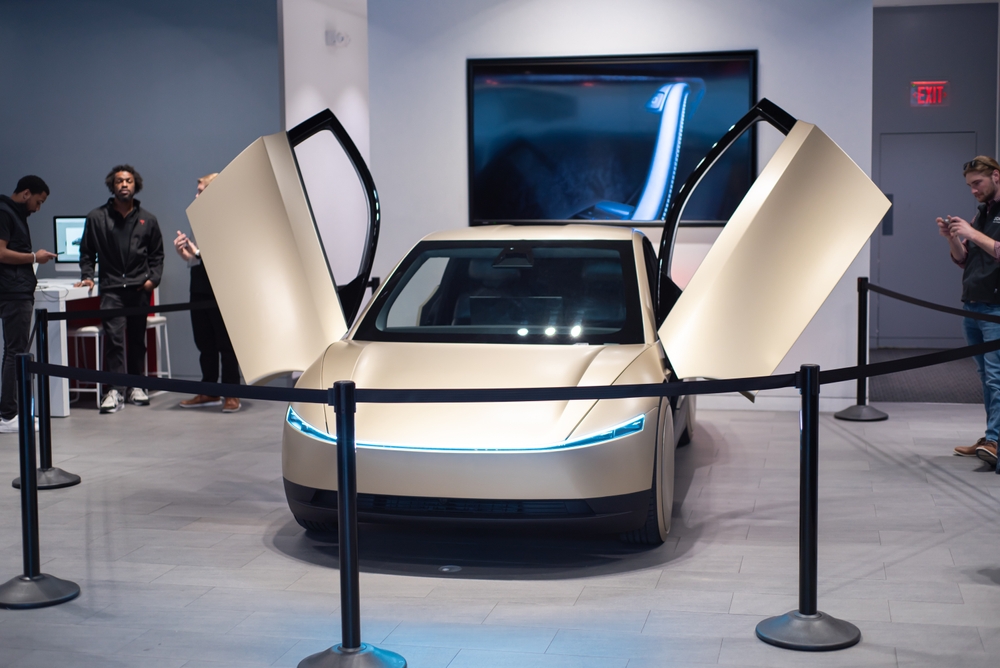

Tesla’s Cybercab robotaxi project has encountered a legal hurdle that could delay the company’s ambitious plans for autonomous ride-hailing. The issue stems from a trademark dispute with a French beverage company. Which has successfully secured the rights to the Cybercab name, complicating Tesla’s efforts to brand its next-generation electric vehicle.
Timing Error Leads to Trademark Conflict
Tesla unveiled the Cybercab robotaxi in October 2024, an electric, fully autonomous vehicle designed to revolutionise the future of transportation. However, the company made a crucial misstep by failing to file for the Cybercab trademark before the public reveal. Tesla filed its application with the U.S. Patent and Trademark Office (USPTO) on October 17, 2024, a week after the vehicle’s announcement. This delayed filing set the stage for complications.
The USPTO flagged Tesla’s application, noting the potential for confusion with an existing trademark held by tire manufacturer Pirelli. But it wasn’t just this issue that created trouble for Tesla. The timing error opened the door for other companies to stake a claim on the Cybercab name.
UniBev Claims the Trademark
A French beverage company called UniBev took advantage of the situation and applied for the Cybercab trademark. By December 12, 2025, UniBev had successfully secured both U.S. and international rights to the name. This development dealt a significant blow to Tesla’s plans, as it meant the company could not proceed with its application.
On November 14, 2025, Tesla received a letter of suspension from the USPTO, halting any progress on its trademark application. The suspension will remain in place until the dispute with UniBev is resolved, effectively freezing Tesla’s use of the Cybercab name in the U.S. and internationally.
Tesla’s Options Moving Forward
Tesla now faces two primary options: negotiate with UniBev for the trademark rights or rebrand the Cybercab entirely. Experts predict that Tesla will likely attempt to purchase the trademark from UniBev rather than go through the costly and time-consuming process of rebranding the vehicle. Losing the trademark could create significant challenges for Tesla, especially when it comes to marketing and regulatory filings.
This setback highlights the importance of securing intellectual property early, particularly for high-profile products. Tesla’s failure to file for the trademark before publicly unveiling the Cybercab has exposed the company to unnecessary legal challenges, even from unexpected competitors.
Impact on Tesla’s Autonomous Ambitions
The trademark issue does not directly impact the development of Tesla’s Cybercab robotaxi technology. It adds another layer of complexity to the company’s already ambitious autonomous vehicle strategy. As Tesla moves forward with its plans to transform the transportation industry, this legal battle could serve as a distraction. The outcome of the dispute will likely have broader implications for Tesla’s marketing and future autonomous vehicle initiatives.
Conclusion
For now, Tesla’s legal team is working to resolve the trademark dispute while the company continues to develop its Cybercab robotaxi. How Tesla navigates this legal challenge will play a key role in shaping the future of its autonomous transportation plans.
Keep following Arabwheels for daily automotive updates and news!
