
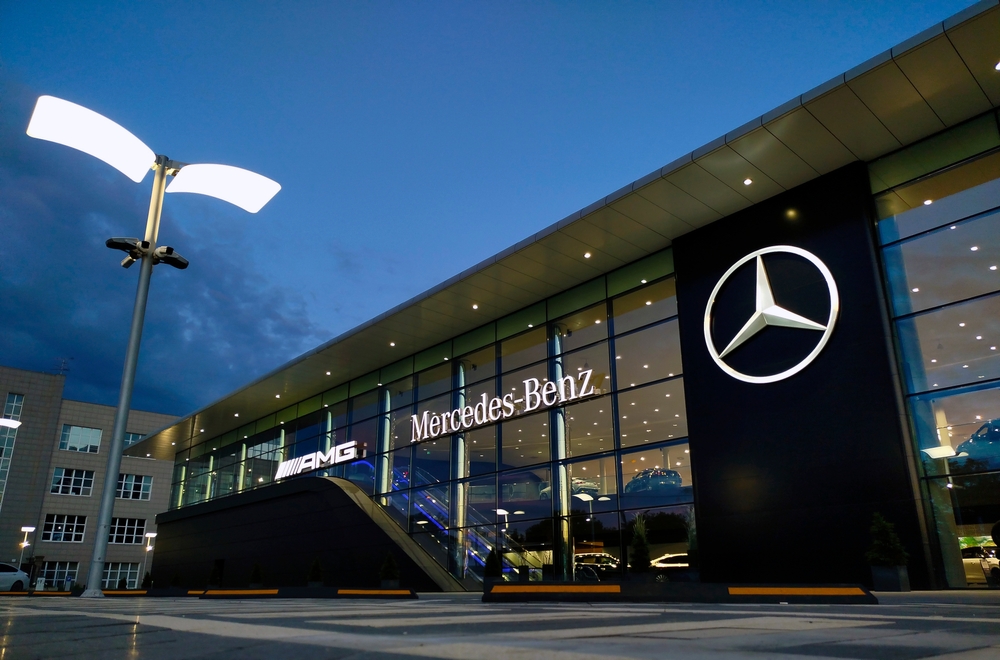

Mercedes‑Benz experienced a notable decline in 2025, with annual figures showing a 10% drop in total vehicles sold worldwide compared to the prior year. The German luxury automaker sold 2.16 million cars and vans over the year. Underscoring mounting challenges in key regions and a changing competitive landscape.
This result highlights how even established premium brands are not immune to shifting consumer demand and intensifying market competition.
Market Breakdown: China Slump and Mixed Regional Performance
China was the most significant drag on Mercedes‑Benz’s global performance, a key reason behind the Mercedes‑Benz sales decline. Once a powerhouse for the brand, China still accounts for roughly one‑third of global sales. Yet demand weakened sharply. Sales in the country fell by 19% to around 551,900 vehicles as local manufacturers ramped up their electric vehicle offerings and consumer confidence slowed.
In contrast, Mercedes‑Benz managed a steadier performance in other key markets:
- Germany: Sales remained broadly flat at about 213,200 units.
- United States: Sales dropped 12% to around 285,000 vehicles, though actual customer deliveries nudged up slightly.
Across the lineup, both entry‑level and core models experienced roughly 10% declines. While luxury-tier models such as the S‑Class, G‑Class, Mercedes‑AMG, and Maybach recorded a 5% downturn. Core models like the C‑Class and E‑Class continued to serve as the backbone of Mercedes’ business.
EV Adoption and Portfolio Dynamics
Electric models accounted for an estimated 10% of total Mercedes‑Benz passenger car deliveries in 2025. Indicating gradual progress in electrification as the company reshapes its portfolio amid industry‑wide shifts. This part of the sales mix remained relatively cautious. Even as global demand for electrified vehicles continues to grow across other brands.
Despite these mixed signals, the Mercedes‑Benz sales decline story isn’t just about volumes. It also reflects how broader market dynamics, from tariffs in the United States to accelerating competition in Asia, are reshaping the premium car segment worldwide. The downturn shows the brand grappling with factors beyond traditional automotive cycles, including economic headwinds and local competitors moving swiftly in key growth markets.
Looking Ahead: Navigating Markets and Competition
As Mercedes‑Benz enters 2026, the company faces the dual challenge of boosting demand while pivoting toward leadership in electrified vehicles. The results from 2025 mark a strategic inflection point: maintaining relevance in legacy markets like Europe and the U.S. While countering aggressive rivals in Asia will be crucial.
The degree to which Mercedes can adapt to these pressures will shape whether the Mercedes‑Benz sales decline trend stabilizes or deepens in the year ahead.
Keep following Arabwheels for the latest automotive trends.
